Local life · Moncton, New Brunswick
Published
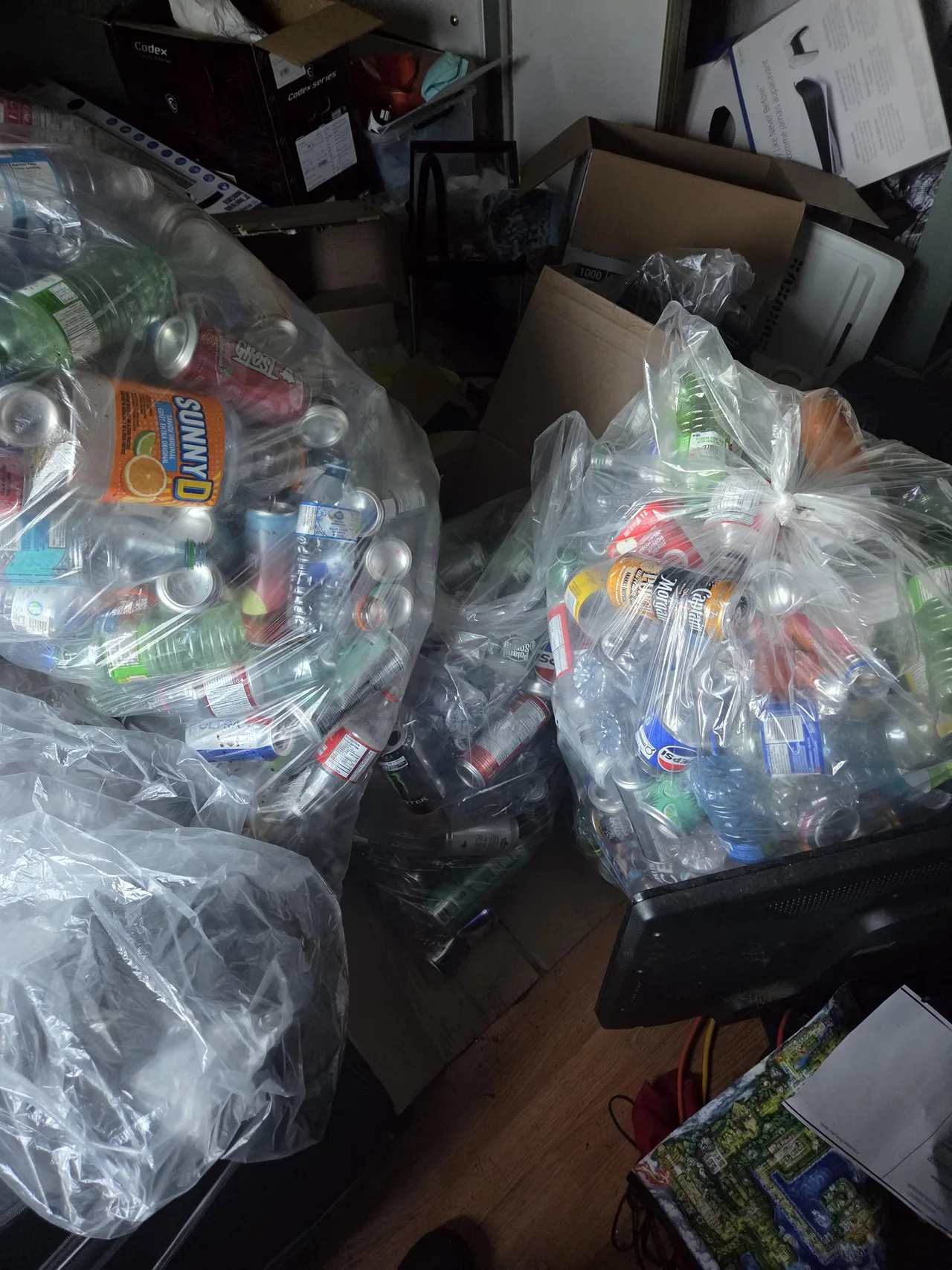
Three weeks of Moncton empties made $35. The cans had started a financial debate.
Most eligible New Brunswick beverage containers return 10 cents, with 20 cents for large glass alcohol containers over 500 millilitres. A local three-week collection reportedly returned about $35. Assessing that as income requires time, transport and storage, not simply multiplying an appealing pile.
Facts checked
In this story
A useful little sum, with ambitions attached
The experiment was modest: empties saved at home and collected at work over three weeks, returning about $35. It was enough to make one Moncton contributor wonder what serious collectors might earn. Before long, a bag of cans had acquired the responsibilities of a business forecast.
Other people recognized the smaller pleasure. Save bags, take them back occasionally, buy a treat or some fuel. One two-person household described waiting until there was enough for a larger return. Not a fortune; still welcome.
The difference is whether the containers are already available or somebody spends a day finding them. A refund total tells only part of the story. The hours have a habit of wanting to be counted too.
Source: A three-week bottle-return experiment
The current arithmetic
Encorp lists 10-cent refunds for most eligible deposit-bearing New Brunswick beverage containers. Large glass alcohol containers over 500 millilitres carry a 20-cent deposit and refund. A separate recycling fee is not the refundable deposit.
At the 10-cent rate, 100 eligible containers make $10 and 350 make $35. That is an example, not an audited count of the contributor’s mixed bags. A much larger earnings claim needs an explanation of the source, rate and time involved.
Older five-cent advice belongs to an earlier system. Full deposit refunds began April 1, 2024; the change was still approaching in a February discussion. Old search results can be very confident about a world that has moved on.
Source: Encorp: beverage-container deposits and refunds
Source: Encorp: container recycling fee
Source: February 2024 Moncton bottle-exchange discussion
What goes in the return bag
A food can and a beverage container are not automatically in the same program. Check the exact item against current guidance, particularly when the eligibility of milk or plant-based drinks is unclear. Local disagreement is not a reliable product list.
Ask the redemption centre how to prepare a large batch and how counting and payment work. Earlier accounts described confusion at the last step, an especially irritating point to discover the job is not finished.
For donated bags, agree on pickup and keep them separate from rubbish. A neighbour, child or sports team may value them without needing a grand theory of the bottle economy.
Source: Encorp: beverage-container deposits and refunds
Source: February 2024 Moncton bottle-exchange discussion
Source: A three-week bottle-return experiment
The person carrying the bags is not a stereotype
Contributors have pushed back against assumptions about collectors’ housing or circumstances. A bag of cans gives remarkably little biographical information. It may contain deposits, donations, an occasional treat or something more important to a tight budget.
People also disagree over the deposit system itself: incentive to return containers or a system they would prefer replaced. That policy argument need not obscure the immediate choice.
If the effort makes sense for your situation, $35 is $35. It does not have to arrive with a resignation letter to be worth having.
Source: A three-week bottle-return experiment
Source: Encorp: beverage-container deposits and refunds
Source: A three-week bottle-return experiment
Questions people ask
How much do most New Brunswick drink containers return?
Most eligible deposit-bearing beverage containers return 10 cents.
Source: Encorp: beverage-container deposits and refunds
Which containers return 20 cents?
Large glass containers for alcoholic beverages over 500 millilitres carry a 20-cent deposit and refund.
Source: Encorp: beverage-container deposits and refunds
How many 10-cent returns make $10?
One hundred eligible containers at that rate make $10.
Source: Encorp: beverage-container deposits and refunds
Does a recycling fee come back with the deposit?
The container recycling fee is separate from the refundable deposit.
Source: Encorp: container recycling fee
Is the old five-cent advice still current?
Not for most eligible containers. Full deposit refunds began April 1, 2024.
Source: Encorp: beverage-container deposits and refunds
Can collecting bottles replace a regular wage?
Do not assume a large return total is an hourly wage. Count collection, sorting and travel time as well as transport costs.
Source: A three-week bottle-return experiment
Can any plastic or metal container earn a refund?
No. Check whether the beverage container is deposit-bearing and accepted by the program.
Source: Encorp: beverage-container deposits and refunds
Can I get a New Brunswick refund for any drink bottle bought elsewhere?
Encorp’s guidance describes deposit-bearing beverages purchased in New Brunswick. Check an out-of-province container with the redemption centre before counting on a refund.
Source: Encorp: beverage-container deposits and refunds
What should I ask before unloading returns?
Ask how the centre wants them prepared and how counting and payment work.
Source: February 2024 Moncton bottle-exchange discussion
Can empties help a local fundraiser?
The discussion includes people donating returns. Agree on collection and storage with the recipient first.
Something changed? Tell us about a correction.